
SSC vs RACK vs PRICK: Which Consent Framework Is Right for You? 🖇️
By Kinkpact · February 1, 2025 · BDSM Safety Education
Why Consent Frameworks Matter 🛡️
In the world of BDSM, “Safe, Sane, Consensual (SSC)” is more than a catchy phrase—it’s the foundation beneath every whip crack, rope tie, and power exchange. Whether you’re a curious beginner or an experienced Dom/Sub, understanding the three major consent frameworks—SSC, RACK, and PRICK—is essential to building trust and ensuring a healthy play dynamic.
👉 If you're new to BDSM, start with our beginner’s guide: What Exactly is BDSM?

Framework 1: SSC (Safe, Sane, Consensual) 🔒
Safe · Sane · Consensual
SSC is the most widely accepted foundational model in the BDSM community. It emphasizes:
- Safe: Activities should be physically and emotionally within a manageable risk range
- Sane: All parties must be of sound mind—not under the influence of drugs or alcohol
- Consensual: Consent must be explicit, freely given, and revocable at any time
Best for: Beginners, casual explorers, fans of sensory play or light roleplay
Common scenarios: Light bondage, spanking, everyday roleplay scenes
📖 Related read: Mastering Power Exchange
Framework 2: RACK (Risk-Aware Consensual Kink) ⚠️
Risk-Aware · Consensual Kink
RACK acknowledges that BDSM inherently involves risk. The goal isn’t to eliminate danger but to ensure everyone involved is fully informed and consciously consenting.
Best for: Intermediate to advanced players, high-intensity scenes, structured D/s dynamics
Common scenarios: Breath play, electroplay, long-term chastity, humiliation tasks
🔥 Curious about edge play? Don’t miss our guide: Edge Play Safety Guide
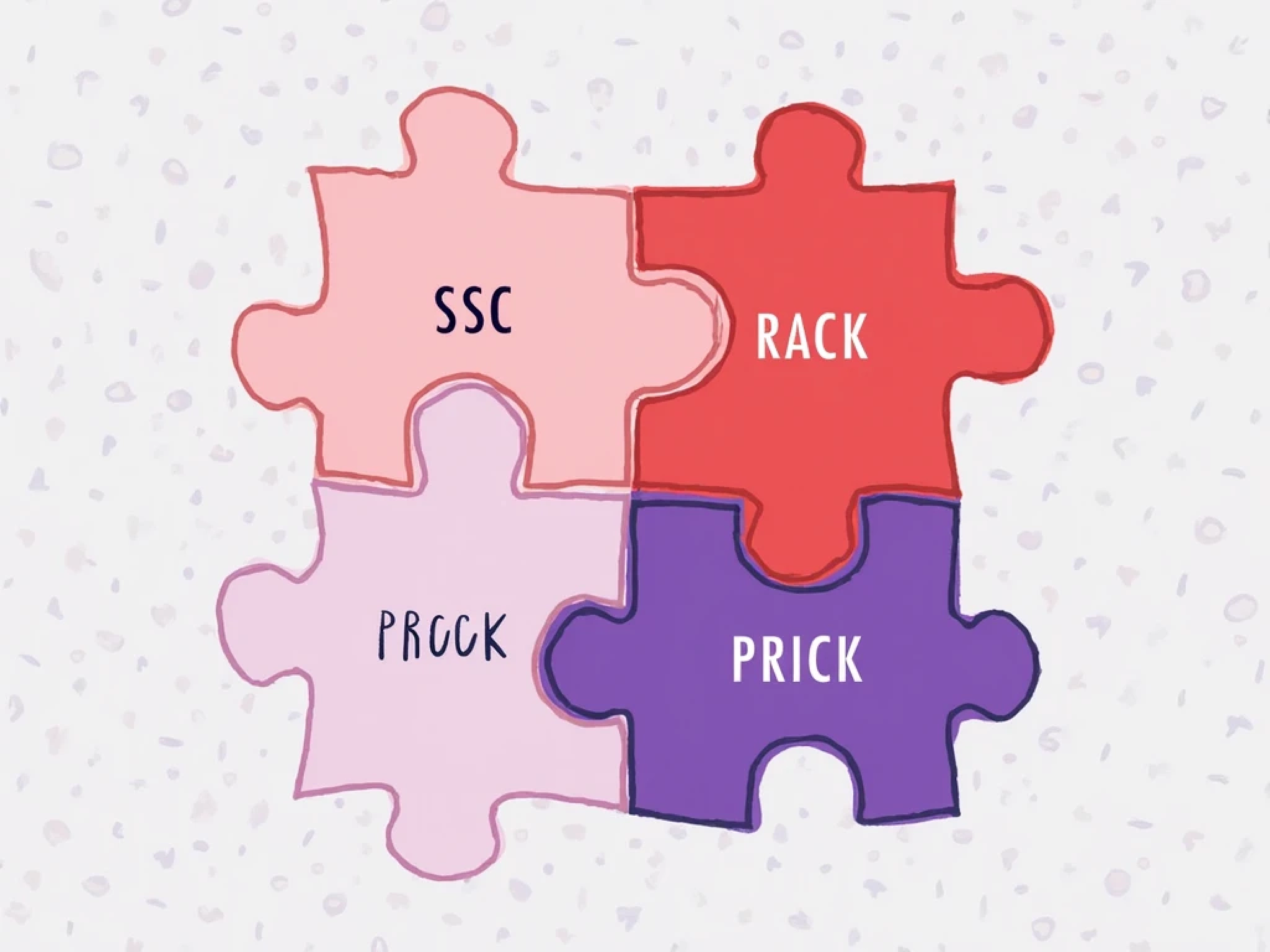
Framework 3: PRICK (Personal Responsibility Informed Consensual Kink) 🧠
Personal Responsibility · Informed · Consensual Kink
PRICK is often seen as an evolution of RACK. It adds an emphasis on personal responsibility—not just understanding risks, but actively preparing for them:
- Who handles emergency response?
- How is aftercare planned?
- Are the protocols reviewed regularly?
Best for: Highly autonomous kinksters, non-traditional relationships (poly, public), long-term TPE dynamics
Common scenarios: 24/7 D/s contracts, extended orgasm denial, public humiliation
📌 Learn more about emotional aftercare here: The Power of Verbal Play

Case Study: Consent Frameworks in a Humiliation Task 🗣️
S and J are a young couple we interviewed. During their second humiliation scene, S instructed J to wear a metal chastity cage and read a humiliating oath aloud on Zoom.
- SSC: Might avoid this entirely, as the safety and mental clarity involved could be ambiguous
- RACK: Would involve a detailed discussion of psychological limits, a clear safeword, and emotional check-ins afterward
- PRICK: Takes it further—aftercare is pre-planned, and emotional states are assessed with pre-scene checklists
🔗 Want to see more on humiliation roleplay? Read: Week 2 – Discipline & Distance
How to Choose the Right Framework for You 🧩
No single model works for everyone. Choose what fits your experience and needs at the moment:
- Just starting out? SSC is the perfect foundation
- Feeling secure with your partner? Explore deeper play with RACK
- In a long-term power exchange? PRICK offers structured tools for sustainability
Remember: frameworks are tools. The real magic lies in honest communication, thorough negotiation, and shared accountability.
🔗 Ready to Begin?
Looking for a professional BDSM Scene Negotiation Checklist to guide your discussions?
👉 Download it here to spark meaningful boundary conversations with your partner.
Want to dive deeper into the PRICK model? Check out this explainer: PRICK Explained – KinkAcademy